The Art of Layering Gold Jewellery
Layering looks effortless and rarely is. The rules are simple — differing lengths, one focal point, and restraint about where you stop.

Layered chains photograph beautifully and go wrong easily. Too close in length and they tangle. Too similar in weight and the whole arrangement reads as one thick, indistinct line. The pieces that make it look easy are usually following three quiet rules.
Rule one: separate the lengths
Chains need space between them — at least four centimetres, ideally five or six. A 40 cm choker with a 46 cm pendant sits comfortably. A 44 cm with a 45 cm will spend the day fighting.
If you own two chains of similar length, wear one and put the other on your wrist instead. Layering is not a way to wear everything at once.
Rule two: one piece leads
In every good layered arrangement, one piece is clearly the subject. Usually it is the longest, and usually it carries the most visual weight — a pendant, a locket, a stone. Everything else is there to frame it.
Two focal pieces in one stack is the most common mistake. The eye has nowhere to settle, and the effect is busy rather than considered.
Rule three: vary the weight, hold the tone
Mix fine with substantial. A whisper-fine chain beside a flat link reads as deliberate; two identical gauges read as an accident.
Tone is where to stay disciplined. Warm rolled gold layers happily with other warm golds and with pearl. Introduce a cool-toned silver into the same stack and both metals look slightly wrong — not because mixing metals cannot work, but because it needs to be the point of the outfit rather than a side effect.
Necklines change everything
A layered stack is drawn to a neckline, not to a mirror.
- Open collar — the most forgiving. Two or three chains, longest sitting at or just below the opening.
- Round neck — keep everything above the fabric line, or everything well below it. A chain that crosses the neckline looks caught.
- High neck — one piece only, worn long over the fabric.
- Saree or draped neckline — a single traditional collar earns the space. Layering here usually subtracts.
Where to stop
Three chains is a stack. Four is a project. Beyond that you are no longer layering, you are wearing a lot of jewellery — which is a legitimate choice, but a different one.
The test is simple: if you cannot see the shape of each individual piece, take one off.
Layering beyond the neck
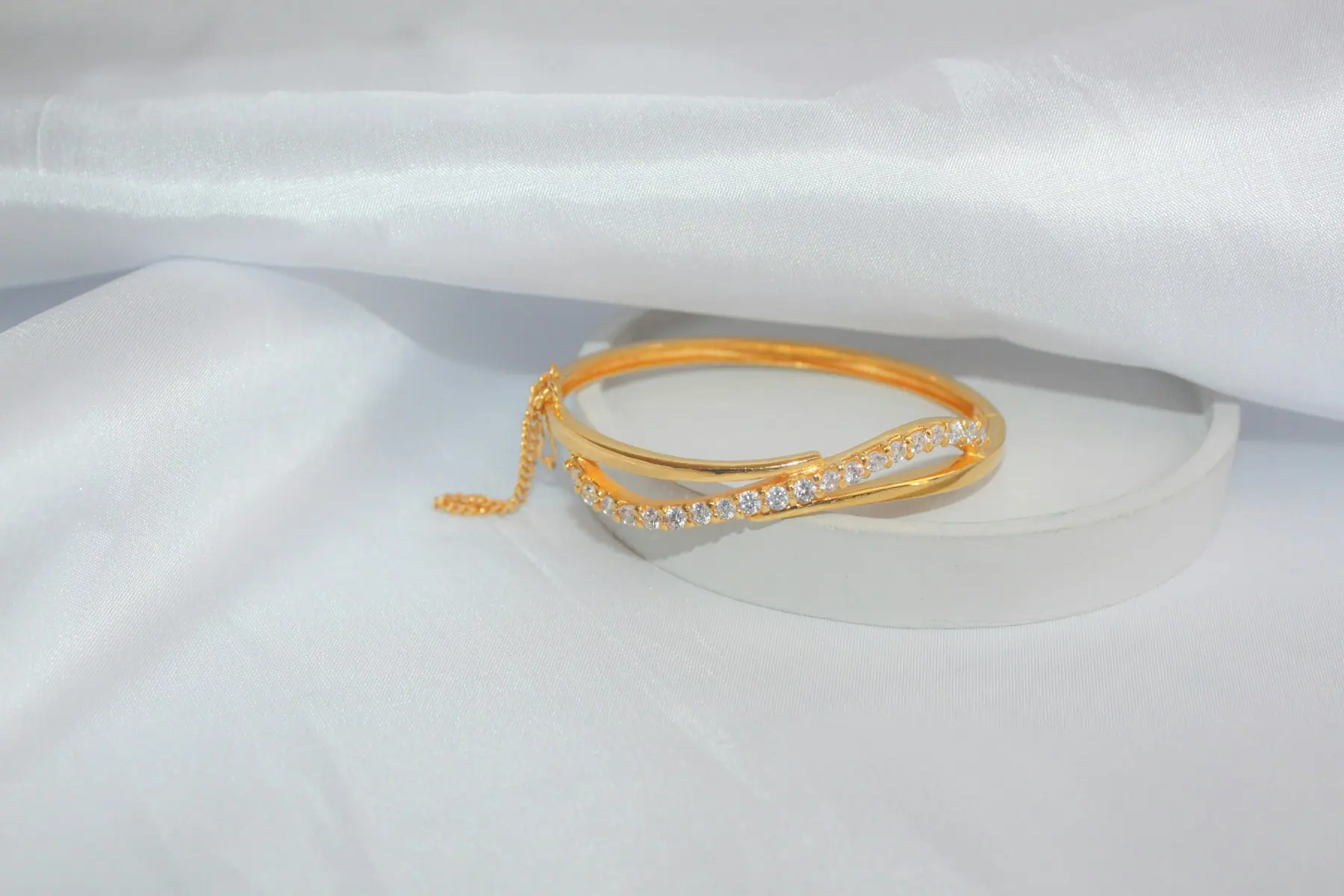
The same logic works on the wrist and the hand. Two or three bracelets of differing weight, one with some presence. Rings stacked on one finger with the widest band at the base. In both cases, keep the other side of the body quiet.
Effortless is almost always the result of having removed something.